
How to Get a Job Referral at Top Tech Companies in 2026 (Without Being Ignored)
Learn how to get a job referral at FAANG and top tech companies without cold LinkedIn spam. Verified referral marketplaces, prep tips, and outreach that actually works.
Introduction
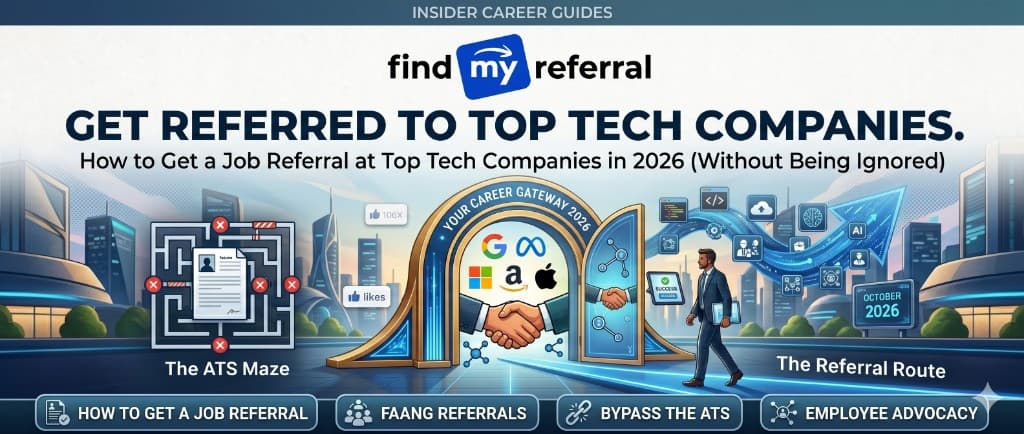
The tech job market has shifted. You spend hours tailoring your resume, writing the perfect cover letter, and hitting "Submit" on a company's career page, only to be met with automated silence. The Applicant Tracking System (ATS) has become a black hole.
If you want your resume seen by a real human being—especially for highly competitive Software Engineering, Product Management, or Data Science roles—you need to bypass the front door. You need an employee referral.
But how do you get a job referral when you don't personally know anyone at your dream company? Here is the complete, modern guide to securing FAANG referrals and tech job referrals without sending desperate, ignored messages into the LinkedIn void.
Why Employee Referrals Are the Ultimate Cheat Code
Companies love referrals. When an internal employee vouches for a candidate, it significantly reduces the company's risk and cost of hiring.
Because of these internal dynamics, employees want to refer good candidates. The disconnect lies in the delivery: how you ask, and who you ask.
- Faster Review: Referred resumes usually bypass the initial algorithmic screening and go straight to a recruiter's desk.
- Higher Conversion: Studies show that referred candidates are hired at a significantly higher rate than standard applicants.
- Financial Incentives: Most tech companies pay their employees a "referral bonus" (often ranging from $1,000 to $5,000) if the person they refer gets hired.
The Old Way: The LinkedIn Spam Trap
The traditional advice for job hunters has been to go on LinkedIn, find a second-degree connection at your target company, and send a cold message.
Here is why that approach is failing in today's market. For a deeper dive, read why your LinkedIn referral messages are being ignored:
- Inbox Fatigue: Senior engineers and managers at top companies receive dozens of these messages every week.
- Lack of Context: An employee cannot blindly refer a stranger without risking their internal reputation. If they refer low-quality candidates, recruiters stop taking their referrals seriously.
- No Incentive to Review: Reviewing your resume, checking your GitHub, and logging into their internal portal to submit your details takes time. Most employees simply do not have the bandwidth to do this for free for a stranger.
How to Prepare Before You Ask
If you are going to request a referral, your professional house needs to be in order. A insider's first thought is, "Will this person make me look good?"
- Optimize Your Resume for the Specific Role: Do not send a generic resume. If you are applying for a Frontend Engineering role, highlight your experience with React, state management, and performance optimization (like Core Web Vitals). Remove the clutter.
- Have a Clean, Actionable Portfolio: If you are a developer, your GitHub should be active. Pin your most complex, well-documented projects to the top. If you built a high-scale application without external UI libraries, highlight that architectural choice. Show, don't just tell.
- Find the Exact Job ID: Employees do not have time to browse their internal job boards for you. Find the exact link and the internal Job ID from the company's public career page so the insider can simply copy and paste it into their portal. Browse company-specific insiders on FindMyReferral to match your target role. For a deep dive on resume and portfolio prep, read 5 things to fix before asking for a software engineering referral.
The New Way: Verified Referral Marketplaces
Because cold outreach is highly inefficient, the tech industry is shifting toward dedicated referral marketplaces.
A insider marketplace connects applicants directly with verified employees who have explicitly opted in to provide application routing support. Here is why this model is rapidly becoming the standard:
- Guaranteed Intent: When you reach out to an employee on a dedicated platform, you know they are actively looking to refer candidates. You are not bothering them; you are engaging them in a service they signed up for. Browse verified insiders who have opted in.
- Verified Identity: Scams are prevalent in the job market. People on LinkedIn or Reddit might claim to work at a top company and ask for money via untraceable payment methods, only to disappear. A high-quality insider marketplace forces employees to verify their corporate email address and LinkedIn profiles before they can accept requests. You know you are talking to a real employee.
- Milestone-Protected Bookings: To compensate the employee for their time (reviewing your resume, answering questions, and navigating the internal portal), these platforms use a paid model. However, the money is held safely in milestone protection. You pay upfront, but the insider only receives the funds after they upload concrete proof that the referral was submitted. If they fail to submit it, you get a refund. Learn more in our How It Works guide—or read is paying for a job referral worth it?
How to Craft the Perfect Referral Request
Whether you use a marketplace or attempt a cold LinkedIn message, your initial outreach needs to be flawless. Keep it short, hyper-relevant, and low-friction. For copy-paste templates, see our perfect routing request template.
Bad Example: "Hi, I need a job. Please refer me to your company. Here is my resume."
Good Example: "Hi [Name], I am applying for the Senior Software Engineer position (Job ID: 12345). I have 5 years of experience building scalable SaaS products and recently led a migration to Server-Side Rendering that boosted performance by 20%. I've attached my resume and the job link. I would highly appreciate it if you could review my profile and consider referring me if you think I am a strong fit."
Setting Realistic Expectations
It is crucial to understand what a referral actually does. A referral guarantees that a human will look at your resume. It does not guarantee you an interview, and it certainly does not guarantee you a job.
The platform you use, and the employee referring you, are simply facilitating the introduction. Once your resume is in the recruiter's hands, your skills, interview prep, and system design knowledge have to carry you the rest of the way. Read our guide on what happens after an employee refers you for the full internal process—and our referral policy for what application routing support includes.
Take Control of Your Job Search
Waiting for an ATS to parse your resume is a losing game. To land a role in a highly competitive market, you need to leverage the internal networks of the companies you want to join.
Stop sending hundreds of applications into the void. Prepare your profile, find the right verified employee, request a referral professionally, and secure your spot at the top of the recruiter's pile. Find a referral on FindMyReferral today.
Frequently Asked Questions
- What does FindMyReferral help applicants do?
- FindMyReferral helps applicants connect with verified company insiders for profile review, internal application routing assistance, and tracking verification. It does not sell jobs, interviews, or hiring outcomes.
- Does internal routing guarantee an interview?
- No. Internal routing can improve profile visibility and tracking context, but employers independently decide shortlisting, interviews, offers, and hiring outcomes.
- How does milestone protection work?
- Payment is tracked through FindMyReferral's milestone workflow. The insider reward is processed only after routing verification is delivered or the request completes under the platform rules.
- What should I include in a routing request?
- Include the exact job link, job ID, tailored resume, target role, key skills, and a concise note explaining why your background fits the opening.